The scope of work of a project assistant involves, in theory, supporting the administrative, operational, and technical functions of the project, ensuring a smoother course in its execution, from their contributions in the pre-development and planning phases through to the closing, with the evaluations, the deliverables, and the social impact analyses.
But, in practice, for a social project of intermunicipal reach that relies on in-person activities, as PerifaImpacto does, the role of the project assistant involves a pedagogical and curatorial work that is not obvious. The choice and procedures of renting or partnering with spaces, to host us in our in-person activities, is also a strategic decision that runs through the pedagogical realm and through the curation inherent to the educational processes the group is experiencing on the learning journey.
PerifaImpacto serves leaders from the periphery (Brazil’s low-income communities) of São Paulo, Greater São Paulo, and Campinas. As such, it involves two metropolitan regions with similarities and differences that must be taken into account when we deal with serving the people who live in the peripheries of these cities. And this is how the processes of urbanization are an essential part of PerifaImpacto’s daily debates. For this decision, the first steps lie in considering the commute of each member of this group, which ranges from hiring transportation to direct contact with the urban mobility conditions of the cities.
Beyond thinking about urban mobility, where we cannot ignore or disregard the structures of a city like São Paulo when we organize activities as planned, it is important, above all, to consider the challenges of these urbanities from the measurement of social impact, during execution and at its closing, through to understanding that these results necessarily go through a study of the territories, with the complexity they present to us, with the contradictions that are at times a strength and at times present themselves as obstacles to our action.
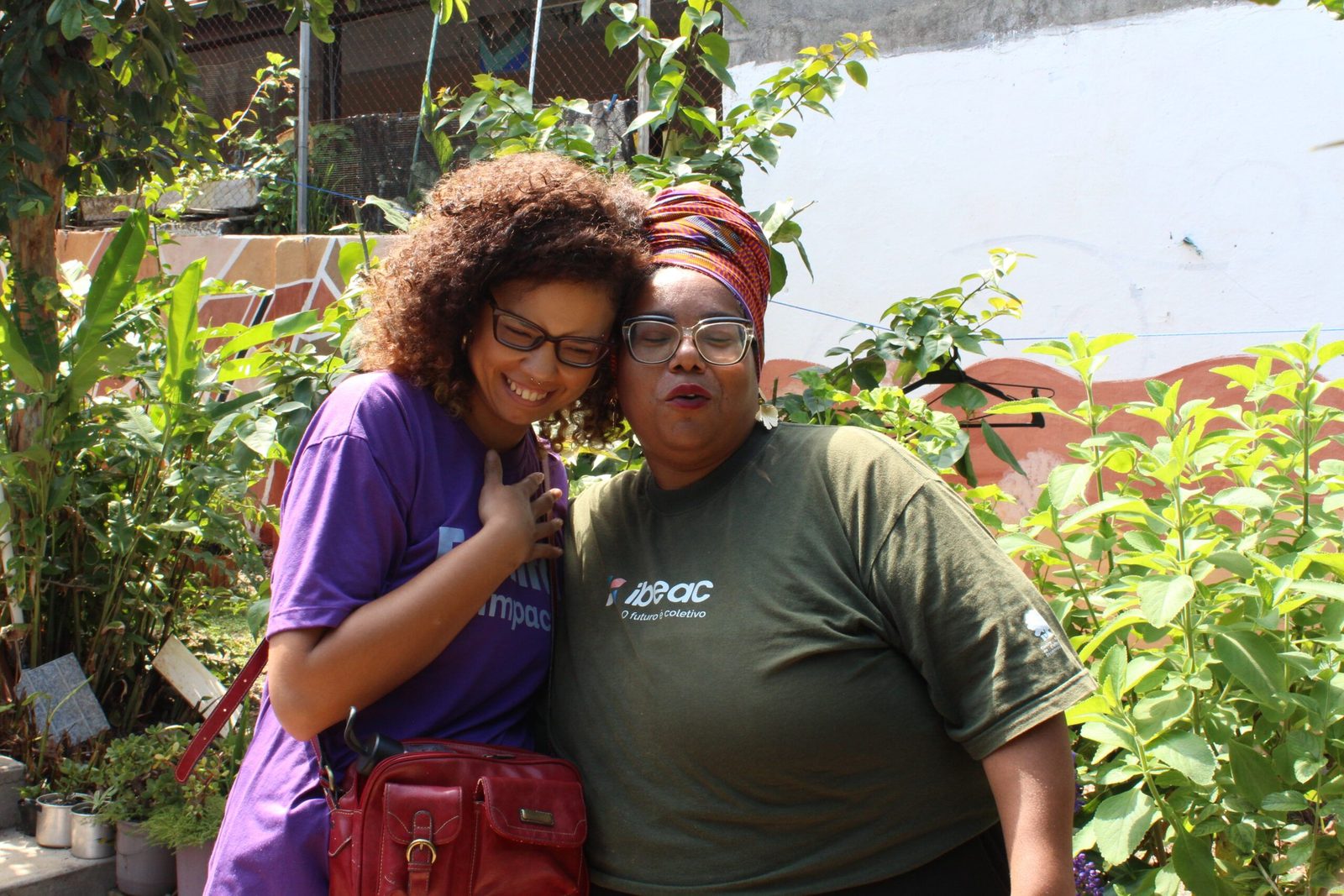
Two Black women, workers in the third sector, embrace each other in the place, with a hug
Place as strength
But territory, which here I will treat as Place, should not be seen as an enemy to be defeated, especially when we organize an in-person gathering in places like Parelheiros, as we did at PerifaImpacto in the month of March. But we also cannot ignore that urban mobility, as it is organized today, presents us with great challenges.
At our monthly gathering in March 2026, we were in Parelheiros, in partnership with IBEAC, for an immersion with social projects whose main goal is to make this district the best place to live in São Paulo. The problem? The district of Parelheiros, long considered one of the worst places to be born and to live in the São Paulo capital, is deliberately segregated from the rest of the city.
PerifaImpacto in Parelheiros
The goal of this urbanization in the hands of a few, who think of the city through the interests of capital accumulation, is that the people who occupy and build this place do not access the city’s centralities, the places where rights circulate not as rights, but as privileges and consumption. Just as it serves these powers to have a city in which these peripheral leaders do not access one another and do not exchange tools and social technologies that can greatly amplify their initiatives.
It is quite true that social impact work does not depend on the determinism of a physical space, which allows us to dream and mobilize, even without access to land. In a country with such a concentrated land structure and so marked by real estate speculation as Brazil, this view is an invitation to make things happen without waiting for the ideal property. However, if we limit ourselves to the digital environment, we give up the ancestral exchange and the local knowledge that only travel and in-person experience can provide.
Let me give an example. There is a very constant claim among some leaders that is: “sometimes I prefer to do things alone because doing them together with other people is very complicated. Sometimes, even sickening.” This is the moment when projects with sufficient investment can and must mobilize practices that go beyond online workshops or one-off gatherings to discuss this topic. What can be very powerful in this case: an immersion in a grassroots land occupation, which lives daily with dialogue with the community, and what’s more, it is this dialogue that keeps the occupation in existence. Were it not for collective unity, nothing could sustain the existence of an occupation that suffers constant attacks. This is how Place reveals its strengths. It does not always systematize knowledge through a workshop or training. Often, it systematizes knowledge in daily life.
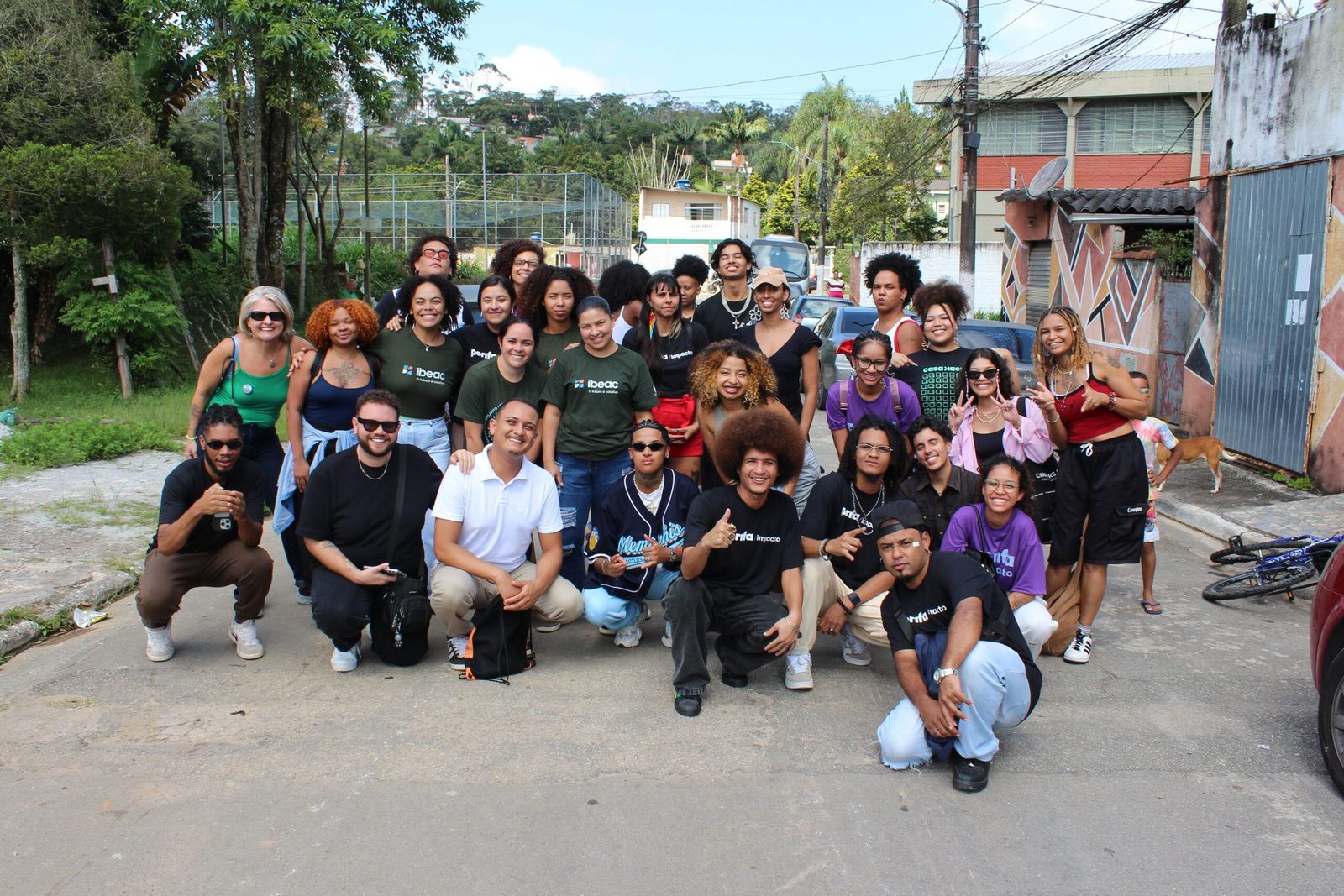
PerifaImpacto in the streets of Parelheiros, the in-person gathering as collective care and essential pedagogical work
The operational as a pedagogical condition
That is why, to think about in-person gatherings, to organize the logistics, the operational side from transportation, from contact with the partners, through to food, and, above all, to ensure the safety and accessibility of the participants, is essentially to think about territory and pedagogy. The project assistants at PerifaImpacto play a fundamental role in the learning journey, which is operational and also educational. The operational is not the opposite of the pedagogical, and in a social project, it is also not merely complementary. At PerifaImpacto, it is its condition of possibility.
